Inspect First
The locksmith identifies the lock, key, vehicle, and nearby components before selecting tools.
Ignition Repair 33111 provides mobile help for homes, businesses, parking areas, and roadways within ZIP code 33111 when a lock, key, ignition, remote, or access problem interrupts the day.
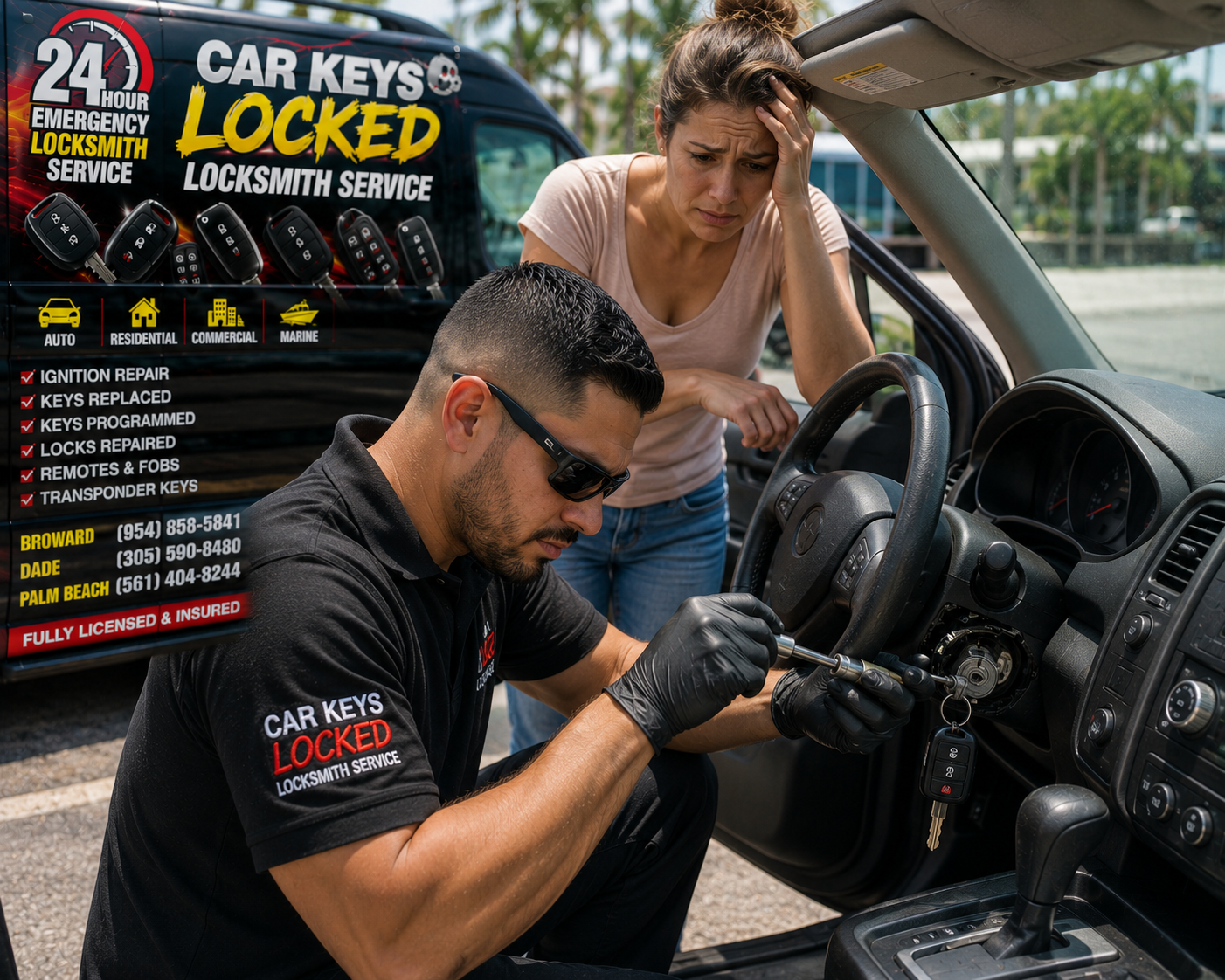
The service is built around diagnosis and repair of a sticking, worn, damaged, or non turning vehicle ignition. A complete visit can involve key condition testing, cylinder inspection, wafer repair, extraction, and replacement only when needed, with each result checked before the work is considered finished.
The correct service line for 33111 is (305) 590-8480. The caller should provide a clear landmark, parking level, gate, entrance, or cross street when the exact vehicle location is difficult to describe.
For the correct county line, call (305) 590-8480. Push the call button above from a mobile phone.
Professional work begins with inspection rather than force. The key, steering lock, battery condition, shifter position, cylinder movement, and electronic authorization are checked to isolate the real cause. Diagnosis before disassembly helps prevent unnecessary ignition replacement and protects nearby trim and wiring.
The locksmith identifies the lock, key, vehicle, and nearby components before selecting tools.
Entry, cutting, programming, extraction, and repair methods are matched to the actual system.
Door, ignition, start, remote, and lock functions are checked as they apply to the completed work.
People searching for a locksmith near me or locksmith close to me usually need a direct answer, the correct county phone number, and a locksmith prepared for the specific vehicle or lock. This page provides that routing for 33111.
Describe whether the key is locked inside, lost, broken, not turning, not starting the engine, or not operating the remote. Accurate details make the service more efficient.
The service begins with identification of the lock or key system and can include key condition testing, cylinder inspection, wafer repair, extraction, and replacement only when needed. The exact work depends on the vehicle, hardware, symptoms, and proof of ownership.
33111 is routed through Miami Dade County. Call (305) 590-8480 so the request reaches the correct county service line.
Professional service is planned around the vehicle design and lock condition. Diagnosis before disassembly helps prevent unnecessary ignition replacement and protects nearby trim and wiring.
Yes. Be ready to show identification and ownership or authorized use information before vehicle entry, key creation, or programming is completed.
Yes. Mobile service is arranged for homes, businesses, parking areas, and roadways within ZIP code 33111.
Do not force it. A worn key, binding wafer, steering pressure, shifter position, damaged cylinder, or ignition problem may be responsible. Controlled diagnosis can prevent a broken key.
A compatible remote should be matched by part information, frequency, button layout, and vehicle features. Each available function should be tested after programming.
Move to a safe visible location when possible, keep identification and ownership information ready, provide accurate parking or gate directions, and avoid forcing the lock or ignition.
A visible or reachable fragment can often be extracted with controlled tools. The lock should then be inspected so the same wear or obstruction does not break the replacement key.
Automotive keyways, transponders, remotes, immobilizers, lock construction, and entry procedures vary by year, make, model, and sometimes production date.
No. Replacement is not always necessary. The locksmith should inspect and test the existing lock, key, cylinder, and electronic system before recommending new parts.
Mobile service can be arranged in many public parking areas when the location is accessible and the customer can provide exact directions and authorized access to the vehicle.
No. Modern doors may contain side air bag components, wiring, shields, cables, and delicate linkages. Vehicle specific tools and methods are safer than blind probing.
Provide the exact location, vehicle year, make and model, the type of key or lock, what happened, and whether any key is still available.
The problem may involve a transponder, immobilizer authorization, damaged chip, ignition reader, battery voltage, or another vehicle system. Mechanical and electronic functions should be tested separately.